
Milk Edition
Hi friends,
How are you this week? I hope you’re doing well. On the east coast, we’re finally getting a bit warmer outside. The cold front that came through the eastern seaboard the last few weeks has been unimaginably frosty. Wherever you’re located, I hope you’re happy, healthy, healing, and at peace. As those of you who are active on socials will know, I’m trying to catch up with the blog posts affiliated with each of the 31 food allergy facts videos I’ve created. If you’re one of my lovely blog-only subscribers, you may feel like I left you hanging or abandoned the project, but we’re still here, besties. I haven’t forgotten it. The last few weeks have been an interesting mash up of exciting opportunities, flare up of new and exacerbated symptoms, and transitioning to a liquid nutrition place due to some very unforgiving symptoms to solid foods. To say it’s been hard is an understatement. Mentally and emotionaly it feels so heavy. I’ve always joked I’m an emotional eater- but when you can’t eat and you’re in the most emotional place you’ve been in, in so long, the mind does some really weird things. I just want to snack on some dye free gummies, chicken soup, hibachi steak – it feels like my body literally hates me. So to distract myself I’ve been delving further into research, library trips, content creation, engaging with those that have sent in questions or testimonials to the blog about their experiences with Hypermobility, EoE, or Mast Cell related conditions. Just trying to keep myself busy. I’ve resorted to drinking my hypoallergenic formula along with a carbonated beverage in hopes of feeling a sensation of fullness. Which, sounds alarms in my head and makes me think of the orthorexic and toxic food/mind cycles I was once trapped inside in high scool thinking it was “for my health” because it kept me from over eating. What mess of emotions it’s brought on. If you’re going through something hard htis week or struggling with food related struggles, don’t feel alone.. you’re never ever alone. I get it. Living it and breathing it every day. By no means is this supposed to be all about me or sound like a pity party. So let’s get to the point of the update. This week, I’ve worked on the next day I need to share in the Daily Food Allergy Facts series (excuse the delay- we’re working through some hard ish)- we’re talking about something that trips up even the most careful label readers:
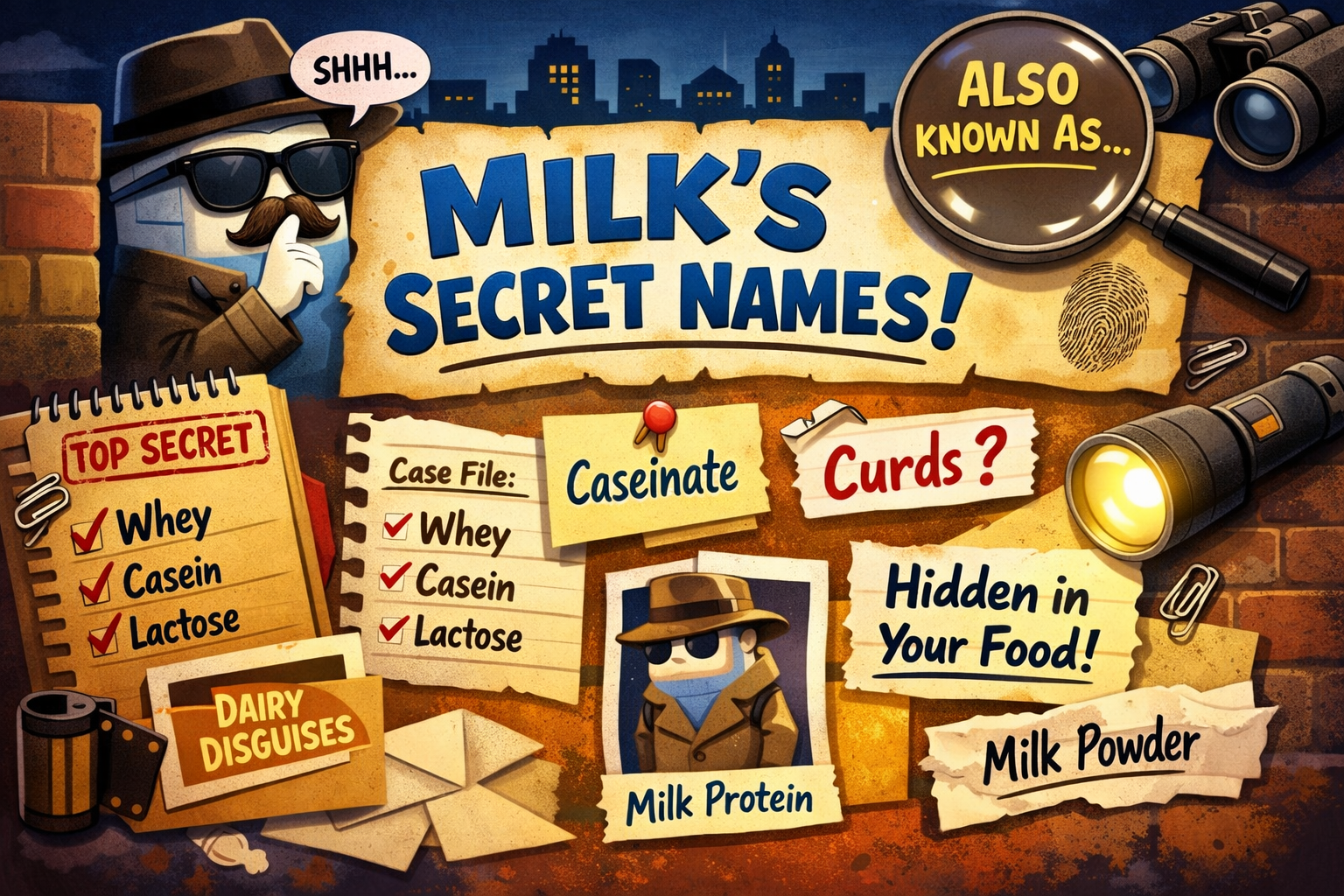
the many sneaky names milk and dairy can hide behind on U.S. food labels.
If you watched the Day 6 video I shared on TikTok or IG, you already know that this isn’t about fear- it’s about informed vigilance. Because when you live with food allergies, intolerances, mast cell disorders (or care for someone who does), reading labels isn’t casual… it’s survival-level literacy – SO necessary.
And milk? Milk is one of the worst offenders when it comes to ingredient name gymnastics. (cue my mental somersault)
why milk is especially tricky on labels
Under U.S. labeling laws, milk is a Top 9 allergen, which means it should be declared clearly. But here’s the catch:
- Milk can appear inside compounded ingredients
- Milk proteins may show up under scientific or industrial names
- Some ingredients sound harmless but are dairy-derived
- And yes- even lactose, which is a sugar and not a protein, can still be an issue for some people with milk allergies
- Why? Because:
- There is no guarantee milk proteins are fully removed
- Cross-contamination is real
- And emerging science suggests some sugars may still provoke immune responses in certain bodies
- Why? Because:
So “it should be safe” doesn’t always equal actually safe.
the sneaky names milk may hide behind
Here’s a non-exhaustive list of milk-derived ingredients or dairy-related terms you might see in an ingredients list. If milk/dairy is a trigger for you- THESE ARE YOUR RED FLAGS:
- Casein / Caseinates
(including calcium caseinate, sodium caseinate, potassium caseinate) - Whey
(whey protein concentrate, whey protein isolate, sweet whey) - Lactose
Even though it’s a sugar, it may still contain trace milk proteins, or trigger immune response- don’t fight me on this. it CAN. - Milk Solids / Nonfat Milk Solids
- Milk Protein
(sometimes listed plainly, sometimes not) - Curds
- Ghee
Often marketed as “clarified butter,” but still milk-derived - Butter, Butterfat, Butter Oil
- Cream / Cream Powder
- Cheese Powder or Cheese Flavoring
- Yogurt or Yogurt Powder
- Custard
- Nougat
(commonly contains milk proteins) - Caramel Color or Flavoring
Sometimes dairy-derived depending on processing- i find it necessary to contact manufacturer to confirm where it’s derrived. Make a risk assessment for yourself! - Natural Flavors
This one is especially frustrating- milk may be part of the flavor base. and because it’s “natural” the title covers it “truthfully”. are you mad? you should be. because this is way to vague to be acceptable in my opinion. - Lactalbumin / Lactoglobulin
- Rennet Casein
Found in some processed foods and supplements
If you’re thinking, “Why are there so many?”– you’re not wrong in feeling this is IFFY… maybe ven shady. Milk is so widely used because it can improve texture, flavor, browning, and shelf life. Unfortunately, that convenience for manufacturers creates risk for us.
a quick but important reminder
“Dairy-free” does not always mean milk-free.
And “non-dairy” is not a regulated term when it comes to allergies. WHICH LITERALLY MAKES ME LIVID. I can’t explain why this is allowed… but I promise I’m searching for answers.
How2NotDie:
Always:
- Read the full ingredient list
- Check the Contains: Milk statement and
- Watch for advisory warnings like “may contain milk” or “processed in a facility…”
And if something feels unclear? Trust that instinct. Your mind/body- it’s not dramatic- it’s protective. If it feels iffy, trust your gut.
why we’re talking about this
This series exists because too many people have reactions that were caused by unclear labeling, hidden ingredients, or misleading language.
The system just isn’t built with chronic illness or food allergies in mind.
So this week is about naming the problem, sharing knowledge, and helping each other stay safer- one label at a time.
If this post helped you, consider sharing it with someone who’s newly navigating food allergies, or saving it for your next grocery run. And as always, thank you for being here and learning alongside me. If you think you might need some help with navigating food allergy and ingredients labels, I recommend checking out my post about the Fig App. It can be a helpful resource! Check out the post, it’s linked above, and lmk if you find it useful.
💛
-Lauren
Hi friends! My name is Lauren. Thank you for being here and for making it this far. If you like what I’m doing here and want to suport me/the blog – feel welcome to follow along on Instagram or TikTok– where we’re 8.3k strong and continuing to grow! You can also Buy Me a Cup of Coffee (isn’t that cool? I’m learning something new everyday!). Click around for some of the best resources I’ve found for food allergies, clinical trials, and drug info. If you have any questions, don’t hesitate to reach out. I’m also accepting patient stories, if anyone’s interested in sharing their rare disease experience or looking for a place to share their diagnostic odyssey or promote your blog/business – reach out to me, I’d love to elevate other rare voices. I’m so happy you’re here and happy you’re alive for another day. <3 XoXo, Lauren


Leave a Reply